What to Do After GATE: M.Tech, PSU, and Research Career Options
So, you've cleared the GATE exam – congratulations! This is a significant achievement, a testament to your hard work and technical prowess. But now comes the big question that many students from Bihar, Jharkhand, Uttar Pradesh, and West Bengal grapple with: what to do after GATE? The truth is, your GATE score is a golden ticket, opening up a spectrum of prestigious and rewarding career paths. Whether you're aiming for higher education, a stable government job, or cutting-edge research, understanding your options is the first crucial step.
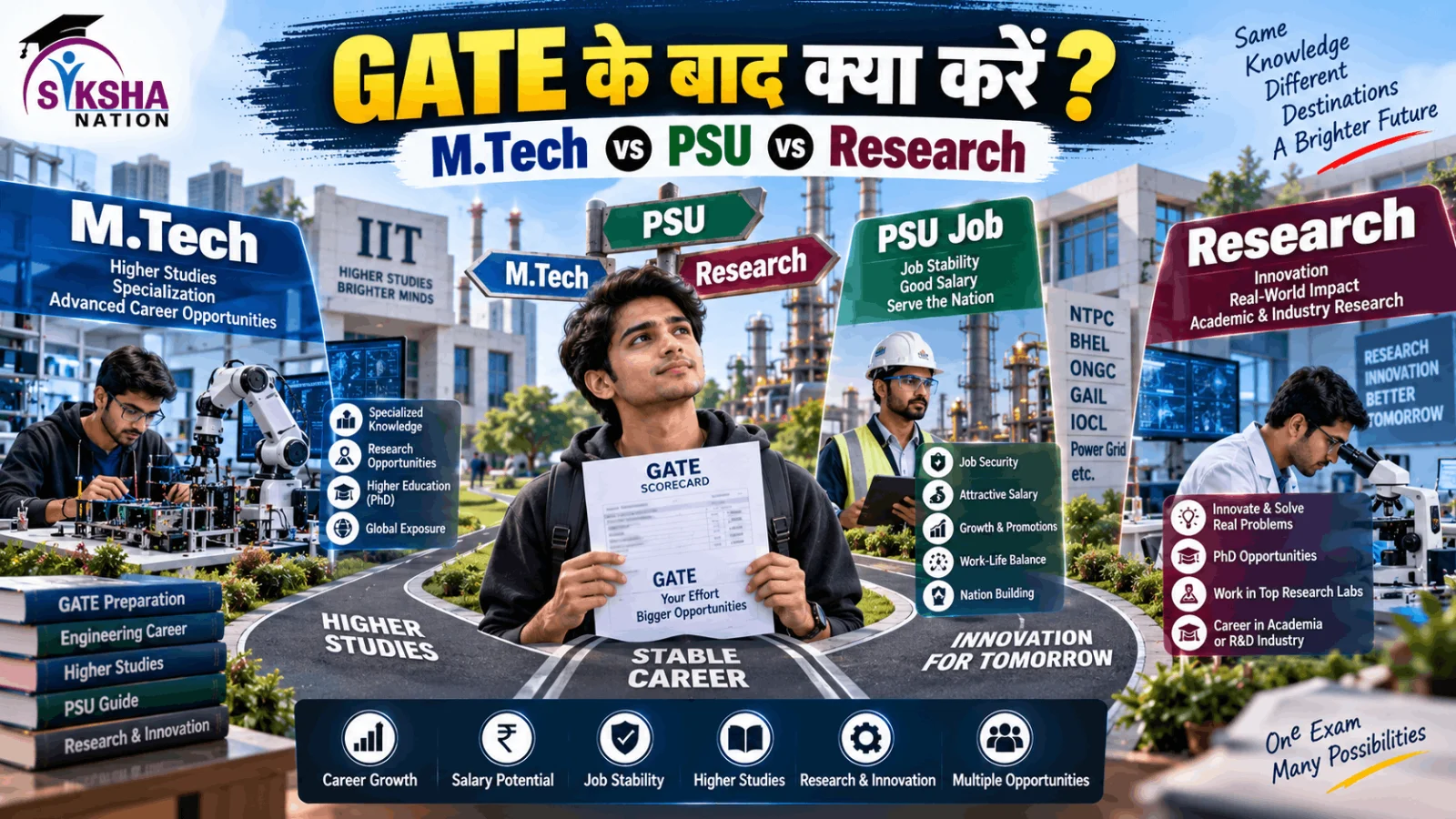
Here's the direct answer you're looking for: After clearing the GATE exam, your primary options are pursuing a Master of Technology (M.Tech) degree from a recognized institution, securing a Public Sector Undertaking (PSU) job, or embarking on a career in research and development. Each path offers unique opportunities for growth, specialization, and professional fulfillment, depending on your aspirations and GATE score.
Understanding Your GATE Score: More Than Just a Number
Before diving into the specifics of M.Tech, PSUs, or research, it's vital to truly understand what your GATE score signifies. It's not just a numerical value; it's a benchmark of your engineering aptitude and a key differentiator in a competitive landscape.
- Raw Score vs. Normalized Score vs. GATE Score: You'll see a raw score, then a normalized score (especially if your exam was in multiple sessions), and finally, your official GATE score out of 1000. It's this GATE score that institutions and PSUs primarily consider.
- All India Rank (AIR): This is arguably more important than the absolute score. Your AIR tells you where you stand among all candidates who appeared for the exam in your particular branch. A higher rank usually translates to better opportunities.
- Cut-off Marks: Different institutions and PSUs will have varying cut-off marks for different programs and positions. These cut-offs change every year based on factors like the difficulty level of the exam and the number of applicants. What most students don't realize is that a good GATE score might be sufficient for M.Tech admissions but might not make the cut for highly sought-after PSUs, and vice-versa.
Always remember to check the previous year's cut-offs for your desired programs or PSUs, but use them only as a general guide. The current year's scenario might differ.
Option 1: Pursuing M.Tech – Deepening Your Technical Expertise
For many engineering graduates, particularly those from states like Bihar, Jharkhand, and UP, an M.Tech degree is the most straightforward and popular path after GATE. It's an opportunity to specialize, enhance your knowledge, and boost your career prospects significantly.
Why Consider an M.Tech?
- Specialization: Your B.Tech degree gave you a broad foundation. M.Tech allows you to dive deep into a specific area like Artificial Intelligence, Machine Learning, Data Science, VLSI Design, Robotics, Renewable Energy, or Structural Engineering. This specialization makes you a sought-after expert.
- Research & Innovation: If you have a curious mind and love problem-solving, M.Tech provides a platform for research. You'll work on projects, contribute to new technologies, and potentially publish papers.
- Career Advancement: An M.Tech degree often leads to better job roles, higher starting salaries, and faster career progression in R&D, design, or specialized engineering positions in both private and public sectors.
- Academic Career: If teaching or research at a university level interests you, M.Tech is a crucial step towards a Ph.D. and eventually, a professorship.
The M.Tech Admission Process
Admission to M.Tech programs in prestigious institutions across India, including those affiliated with recognized universities, primarily relies on your GATE score. Here's a general overview:
- Application: Institutions release their application forms post-GATE results. You'll need to apply to your preferred colleges based on your score and specialization.
- Counseling/Interviews: Some institutions conduct centralized counseling based on GATE scores. Others might have their own interview rounds to assess your technical knowledge and research interest.
- Eligibility: Generally, a B.Tech/BE degree in a relevant engineering discipline with a minimum percentage (often 60% or 6.5 CGPA) is required.
It's important to choose an institution that is well-regarded and offers strong placement opportunities in your chosen specialization. Always check for accreditation by bodies like NAAC and affiliations with recognized universities, as these ensure quality education and better career prospects.
Funding Your M.Tech: Scholarships and Student Loans
One of the biggest advantages of pursuing M.Tech through GATE is the financial support available:
- MHRD Stipend: Most students admitted to M.Tech programs in AICTE-approved institutions through GATE receive a monthly stipend (currently ₹12,400) from the Ministry of Human Resource Development (MHRD). This stipend significantly eases the financial burden.
- Other Scholarships: Various government and private organizations offer scholarships for postgraduate studies. Keep an eye out for these opportunities.
- Bihar Student Credit Card Scheme: For students from Bihar, the Bihar Student Credit Card Scheme (BSCCS) is an excellent option. It provides financial assistance up to ₹4 lakh for higher education, including M.Tech, at a very nominal interest rate. This scheme has been a game-changer for countless students from the state, enabling them to pursue their dreams without financial constraints.
"Many students initially feel that M.Tech is just two more years of studies. But what I've seen over the years is that it's an investment that pays dividends for decades. The depth of knowledge and problem-solving skills you gain are invaluable, especially when you step into roles that demand innovation and critical thinking. Don't just chase a degree; chase expertise."
— Senior Education Counsellor, Sikshanation
Option 2: Cracking PSUs – A Stable and Rewarding Career
For those who prefer a direct entry into the professional world with job security, competitive salaries, and excellent benefits, Public Sector Undertakings (PSUs) are an incredibly attractive option after GATE. Many top PSUs recruit exclusively through GATE scores.
What Are PSUs and Why Are They Attractive?
PSUs are government-owned corporations that play a crucial role in India's economy. They operate in various sectors, including:
- Energy: NTPC, ONGC, IOCL, BPCL, HPCL, GAIL
- Power Transmission: POWERGRID
- Manufacturing: BHEL, SAIL, HAL
- Telecommunications: BSNL (though direct GATE recruitment is less common now)
- Infrastructure: NHAI, DMRC
The allure of PSUs lies in:
- Job Security: High stability and comprehensive employee benefits.
- Competitive Salary & Perks: Attractive pay packages, housing, medical facilities, and retirement benefits.
- Work-Life Balance: Generally better than many private sector jobs.
- Contribution to Nation-Building: A sense of pride in working for national development.
The PSU Recruitment Process After GATE
The selection process for PSUs generally involves:
- GATE Score Shortlisting: This is the first filter. PSUs announce cut-off scores, and candidates above this threshold are shortlisted.
- Group Discussion (GD) & Personal Interview (PI): Shortlisted candidates undergo GD and PI rounds. These assess your communication skills, leadership qualities, teamwork, technical knowledge, and suitability for the role.
- Medical Examination: A final medical fitness test is usually mandatory.
To succeed in PSU interviews, it's not enough to just have a good GATE score. You need to brush up on your core engineering concepts, stay updated on current affairs, and practice your communication and presentation skills. Mock interviews can be incredibly helpful here.
Option 3: Research and Academia – The Path of Innovation
If you have a strong inclination towards fundamental research, developing new technologies, or shaping young minds, a career in research and academia could be your calling.
Exploring Research Opportunities
- Junior Research Fellow (JRF): With a good GATE score, you can apply for JRF positions in various government research organizations and scientific institutions. These positions often lead to Ph.D. opportunities.
- Direct Ph.D. Programs: Some premier institutions offer direct Ph.D. admissions based on GATE scores, bypassing the M.Tech requirement, especially for exceptionally strong candidates.
- R&D Divisions: Many public and private companies have dedicated Research & Development divisions where your GATE-validated analytical skills can be highly valued.
A Career in Academia
After completing your M.Tech (and often a Ph.D.), you can aim for a career as a lecturer or professor in engineering colleges and universities. The UGC and AICTE emphasize qualified faculty, and a strong academic background, including a GATE score and postgraduate degrees, is highly regarded. This path allows you to contribute to engineering education and continue your research interests.
What Most Students Overlook: Developing Essential Skills
Regardless of which path you choose after GATE, your technical knowledge alone won't be enough to thrive. Here are some critical skills that students, especially those from emerging regions, often overlook but are vital for success:
- Communication Skills: Being able to articulate complex ideas clearly, both verbally and in writing, is paramount. This is crucial for interviews, presentations, and even day-to-day professional interactions.
- Problem-Solving & Critical Thinking: Beyond theoretical knowledge, employers look for individuals who can apply that knowledge to solve real-world problems.
- Teamwork & Leadership: Most engineering projects are collaborative. The ability to work effectively in a team, and to lead when required, is highly valued.
- Project Work & Internships: Practical experience matters. Engage in relevant projects during your B.Tech, and seek out internships. They provide hands-on experience and strengthen your resume.
- Staying Updated: Technology evolves rapidly. Continuously learn new tools, software, and industry trends. Online courses and workshops can be very beneficial.
Making Your Decision: A Step-by-Step Approach
Choosing the right path after GATE is a personal decision, but it doesn't have to be overwhelming. Here's a structured approach:
- Self-Assessment: What are your long-term career goals? Do you enjoy theoretical learning and research, or are you eager to enter the workforce? Are you seeking stability (PSUs) or innovative challenges (M.Tech, R&D)? Be honest with yourself about your interests and strengths.
- Research Thoroughly: Invest time in researching specific M.Tech programs, PSUs, or research labs. Look at their past placements, faculty expertise, work culture, and career progression paths.
- Consult Mentors and Counsellors: Talk to your professors, seniors who have gone through this process, and experienced education counsellors. Their insights can be invaluable. Sikshanation's expert counsellors have guided thousands of students through these crucial decisions, understanding the unique challenges faced by students in Bihar, Jharkhand, and UP.
- Consider Financial Implications: While M.Tech offers stipends and schemes like the Bihar Student Credit Card are available, understand the overall financial commitment for each option.
- Don't Rush: This is a life-altering decision. Take your time, weigh all pros and cons, and choose a path that aligns with your aspirations and capabilities.
Your GATE score is a powerful tool. Use it wisely. The journey ahead might seem daunting, but with proper guidance and a clear vision, you can build a fulfilling and successful career. Whether it’s advancing your technical expertise with an M.Tech, securing a prestigious PSU role, or contributing to the world through research, the opportunities are vast.
Remember, at Sikshanation, we are committed to empowering students from Bihar, Jharkhand, UP, and West Bengal to make informed career choices. If you need personalized guidance on your GATE score, M.Tech admissions, or PSU preparation, don't hesitate to reach out to our expert counsellors. Visit SIKSHA NATION to explore more resources and connect with us.
Frequently Asked Questions
Q: Is M.Tech really worth it after B.Tech?
A: Absolutely, for many students, an M.Tech is a game-changer. It allows you to specialize, gain deeper technical expertise, and often leads to higher-paying jobs, R&D roles, and faster career growth. With the MHRD stipend and schemes like the Bihar Student Credit Card, the financial burden is also significantly reduced, making it a sound investment in your future.
Q: What kind of PSUs recruit through GATE?
A: A wide range of Public Sector Undertakings (PSUs) recruit engineers through GATE. These include companies in the energy sector (ONGC, NTPC, IOCL), power transmission (POWERGRID), manufacturing (BHEL, SAIL), and others. They look for engineering graduates from various disciplines to fill roles in operations, maintenance, design, and project management.
Q: Can I get a good M.Tech college with an average GATE score?
A: Yes, it's possible. While top-tier institutions might require very high scores, many other reputable colleges affiliated with recognized universities offer excellent M.Tech programs and accept a wider range of GATE scores. Your chances also depend on the specific branch and program you're applying for. Don't be discouraged; explore all your options and apply strategically.
Q: Is a research career a viable option after GATE for fresh graduates?
A: Yes, it is! While most research careers involve a Ph.D., a good GATE score can open doors to Junior Research Fellow (JRF) positions in various government research labs or even direct Ph.D. programs at certain institutions. These roles provide valuable experience and often lead to full-fledged research careers or academic positions.
Q: How can Sikshanation help me with my post-GATE decisions?
A: Sikshanation offers personalized career counseling by experienced experts who understand the nuances of M.Tech admissions, PSU recruitment, and research paths. We can help you analyze your GATE score, explore suitable colleges and programs, understand scholarship opportunities like the Bihar Student Credit Card, and prepare for interviews, ensuring you make an informed decision aligned with your aspirations.
Q: Are there any scholarships available for M.Tech students?
A: Yes, the most prominent one is the monthly stipend provided by the Ministry of Human Resource Development (MHRD) for GATE-qualified students admitted to AICTE-approved M.Tech programs. Additionally, various state governments, private organizations, and institutions offer their own scholarships. Students from Bihar can also benefit from the Bihar Student Credit Card Scheme.
Q: What if my GATE score isn't as good as I hoped? Should I reappear?
A: This is a common dilemma. If your score isn't sufficient for your desired options, reappearing for GATE is definitely a valid choice, but not the only one. Consider why your score was lower – was it preparation, exam strategy, or specific weak areas? Sometimes, focusing on improving specific skills or exploring other non-GATE dependent career options might be more beneficial. Discussing this with a counsellor can help you weigh the pros and cons.